
Executive Summary
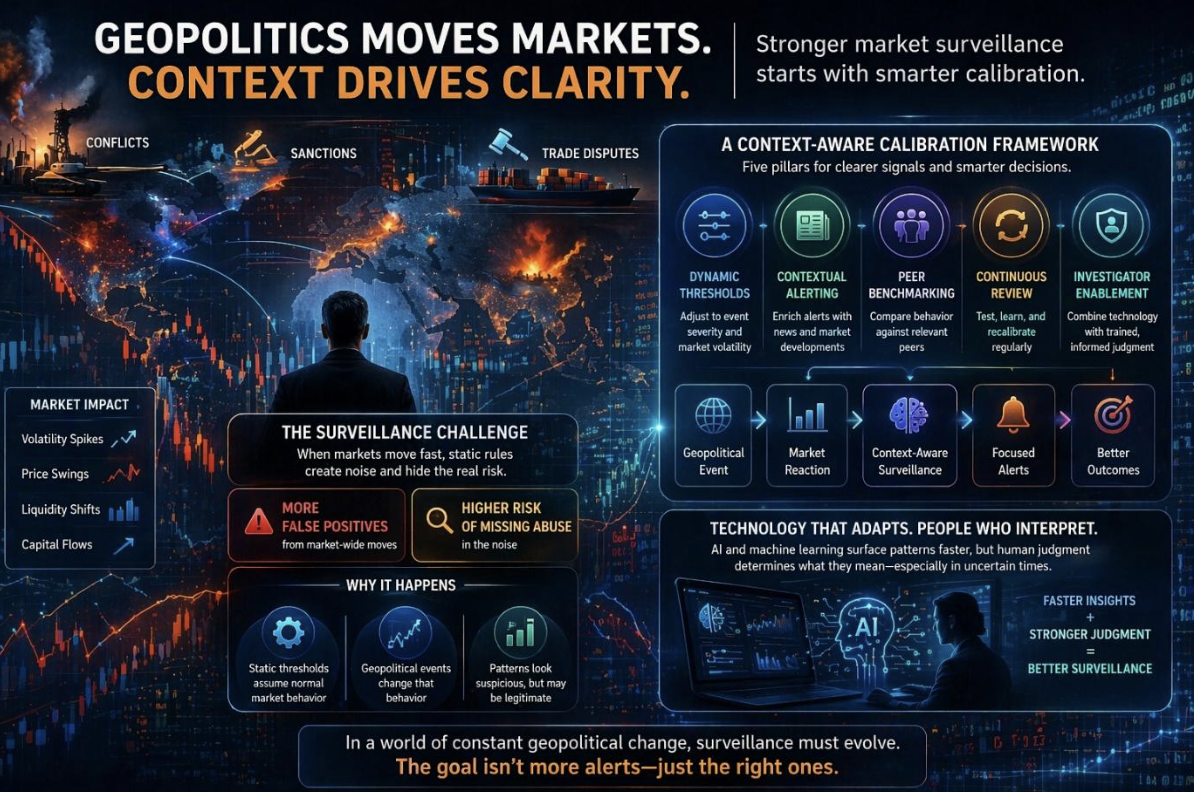
Geopolitical events such as conflicts, trade disputes, and sanctions significantly increase market volatility and disrupt trading patterns. These events cause rapid shifts in asset prices and liquidity, making it difficult to distinguish between trader’s legitimate reaction to the increased market volatility and manipulative behaviour. Traditional market surveillance systems have static thresholds, that cannot withstand the sudden market volatility, causing high false positives. This creates a risk of missing true market abuse, potentially leading to regulatory scrutiny. Financial institutions should embed geopolitical factors in their surveillance calibration process using dynamic threshold adjustments, contextual alerting, and peer behaviour review, along with specialized training for investigators. Institutions should proactively adapt their surveillance frameworks to better respond to future uncertainties and regulatory demands.
Incorporating Geopolitics into Market Surveillance Calibration
Introduction
Recent global geopolitical events, including political instability, trade wars, and regulatory changes, have created widespread uncertainty. These disruptions directly impact companies’ operational capabilities and valuations, which are reflected in the financial markets in equity and FX trading. For example, political instability affects rare earth mineral extraction in the renewable sector, technology and export controls disrupt semiconductor manufacturing and tariff changes influence the manufacturing sector. The impact on the equity markets is multiplied across derivatives such as options and futures. Financial markets react both immediately and over time to geopolitical events. Short-term responses include sharp spikes in volatility indices and sudden changes in security prices. Over the long term, these events lead to shifts in sector valuations, liquidity, and capital flows. These changes in financial markets are mirrored in a country’s economy, affecting GDP and purchasing power parity. This underscores the broader impact of geopolitical risks on global financial stability.
Geopolitical events such as conflicts, sanctions, and trade disruptions have a direct impact on financial markets by increasing volatility and altering trading behavior. Surveillance systems that rely on static thresholds and historical norms often struggle to adapt to these conditions. As a result, firms experience a surge in false positives, while the risk of missing genuine market abuse increases. The challenge is not only to detect unusual activity, but to interpret it correctly in the context of changing market conditions. Financial institutions should therefore incorporate geopolitical factors into their surveillance calibration process through dynamic thresholds, contextual alerting, and peer-based benchmarking, supported by stronger investigator judgement.
In this context, geopolitical events should be viewed not as isolated volatility shocks, but as conditions that change how market participants behave. Traders may respond with panic-driven selloffs, opportunistic buying, or liquidity withdrawal. These behaviors can resemble known market abuse typologies such as price ramping or liquidity manipulation. However, under geopolitical stress, similar patterns may be driven by legitimate market reactions rather than intent to manipulate.
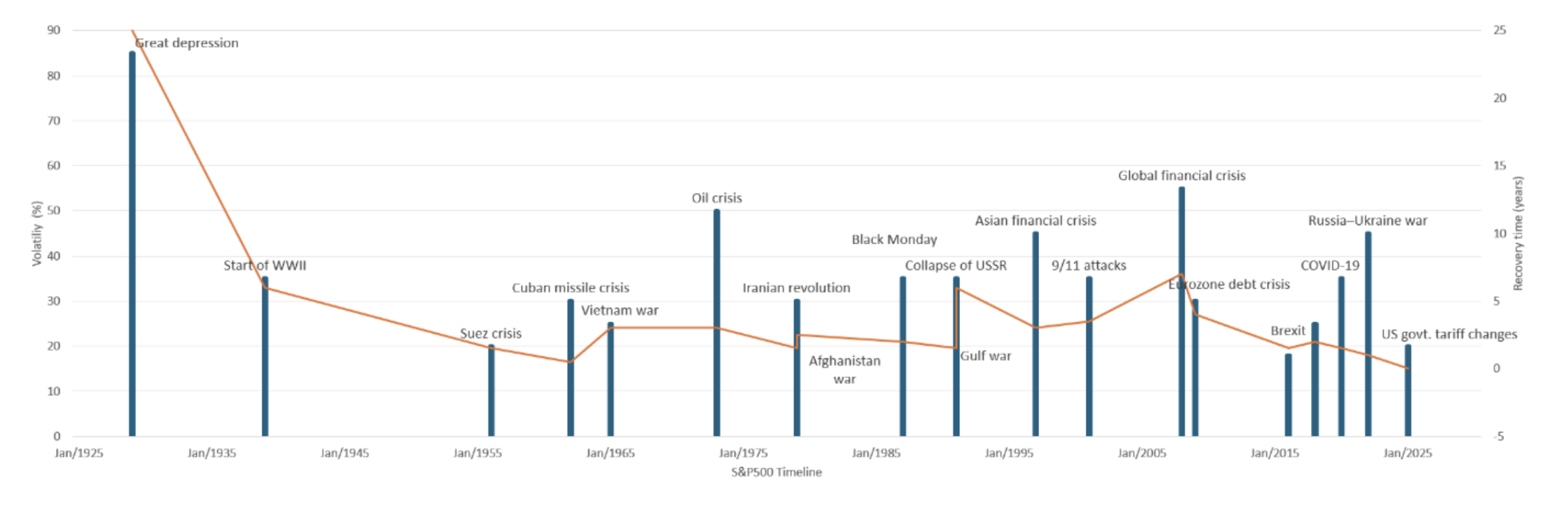
Figure 1: S&P500 index response to geopolitical events
Figure 1 illustrates the volatility and recovery time of the S&P 500 index during major geopolitical events from 1927. The blue bars represent the volatility percentage, while the red line indicates the recovery duration in years. It is evident that geopolitical events have consistently led to increased market volatility, with significant spikes. It is interesting to note that after 2000, the market has seen more volatility spikes, indicating increased market volatility and a higher number of impactful geopolitical events. However, despite these heightened volatility levels, the S&P 500 has shown a trend of quicker recovery over the years. This suggests more movement of the S&P 500 index in both directions within a shorter time frame than the historical average, reflecting heightened market activity and responsiveness. The volatility from the equity market is subsequently reflected in the derivatives markets, as underlying assets of the derivatives become volatile.
Impact on the market surveillance systems
The market conduct function in financial institutions involves practices and behaviors aimed at maintaining the integrity of financial markets. This includes preventing market abuse/ manipulation and ensuring best execution. Market abuse involves activities that distort security prices, while best execution ensures that trades and advice (products and services) are suitable for a client’s risk appetite, investment profile, and objectives. Financial institutions use electronic market surveillance and trade supervision systems to analyze the order data and identify any violations in market conduct practices. The systems identify the trader behavior pattern used to artificially increase or decrease security prices by influencing the market to make unethical and unlawful gains. However, due to increased volatility in today’s dynamic geopolitical environment, it is becoming harder to distinguish between changes in security prices caused by geopolitical events and those driven by trader behavior.
Geopolitical events impact the financial markets and traders in the short and long term. In the short term, they influence traders’ behavior, often leading to well-known panic selloffs or opportunistic “buy the dip” strategies as a response to high market volatility. Panic selloffs immediately result in security price fluctuations, making it difficult to distinguish between a trader’s legitimate response to sudden market changes and potential market manipulation.
In the longer term, geopolitical events impact the market structure and trading strategies. Traders incorporate various risk management techniques, such as widening bid-ask spreads, thinning order book depth, and erratic price discovery, into their trading practices in response to increased market volatility. For example, political instability or war in the oil producing region can lead to reduced liquidity of the securities in the oil and gas sectors due to a sudden surge in demand. This may lead to alerts on large trades and rapid price movements as suspicious. However, these activities may be legitimate, news-driven responses by the market.
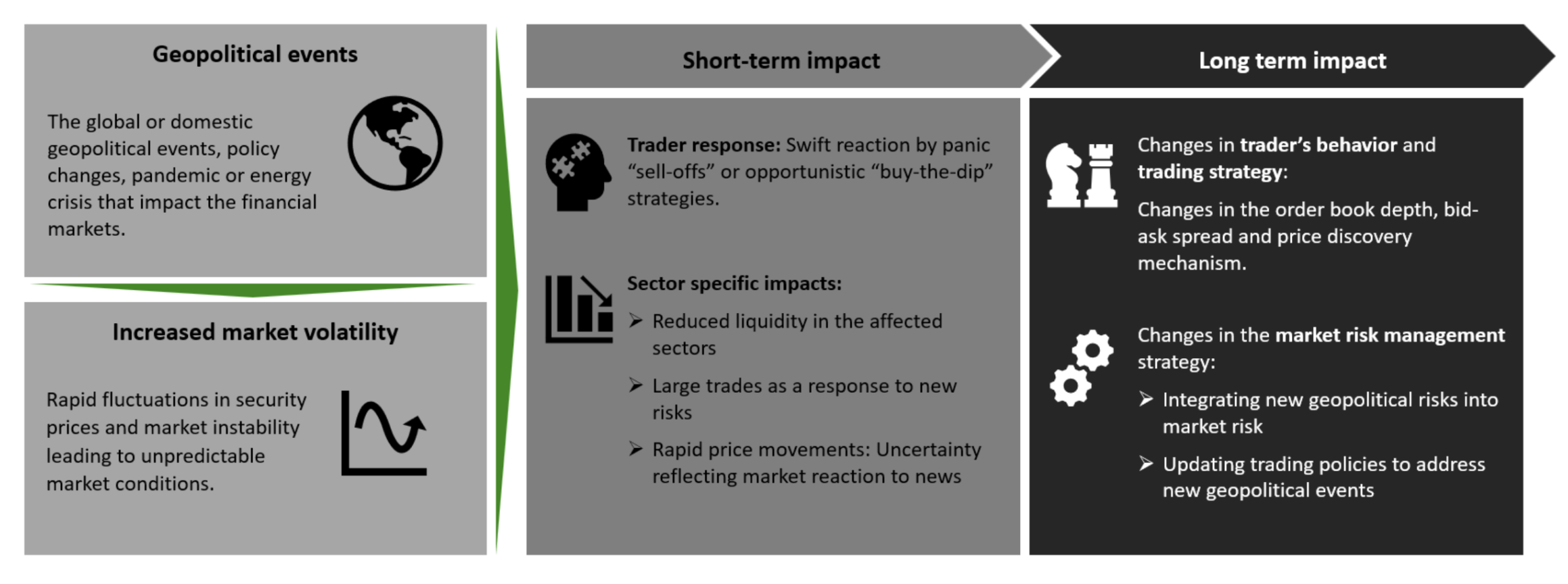
Figure 2: Short-term and long-term impacts on geopolitical events on the financial markets
Traditional market surveillance systems are designed around static rules and historical benchmarks. These systems assume relatively stable market conditions and rely on predefined thresholds to identify abnormal activity. When geopolitical events disrupt these conditions, thresholds calibrated on historical data become less effective. As a result, systems generate a high volume of alerts that reflect market-wide behavior rather than individual misconduct. This reduces the ability of investigators to identify genuinely suspicious activity.
Regulatory Expectations
Regulators expect financial institutions to maintain effective surveillance systems even during periods of extreme market volatility. This includes the ability to detect and report suspicious transactions in a timely and consistent manner. Firms must therefore ensure that their calibration approach remains defensible under changing market conditions, with clear documentation of how thresholds are adjusted and validated.
Incorporating geopolitical events into market surveillance calibration:
Here are some of the practical steps that a financial institution can take to develop a calibration approach considering the market volatility driven by geopolitical events.
Embedding Geopolitical factors in market surveillance system: Geopolitical events and their potential impact on the market volatility should be embedded in every aspect of the market surveillance calibration process such as security segmentation, threshold calibration and alert investigation. The process should consider the likelihood of market fluctuations based on the severity and relevance of the geopolitical events for a realistic threshold setting. This will help the system to maintain alert settings relevant to real-world conditions as they change, reducing unnecessary alerts during periods of heightened activity.
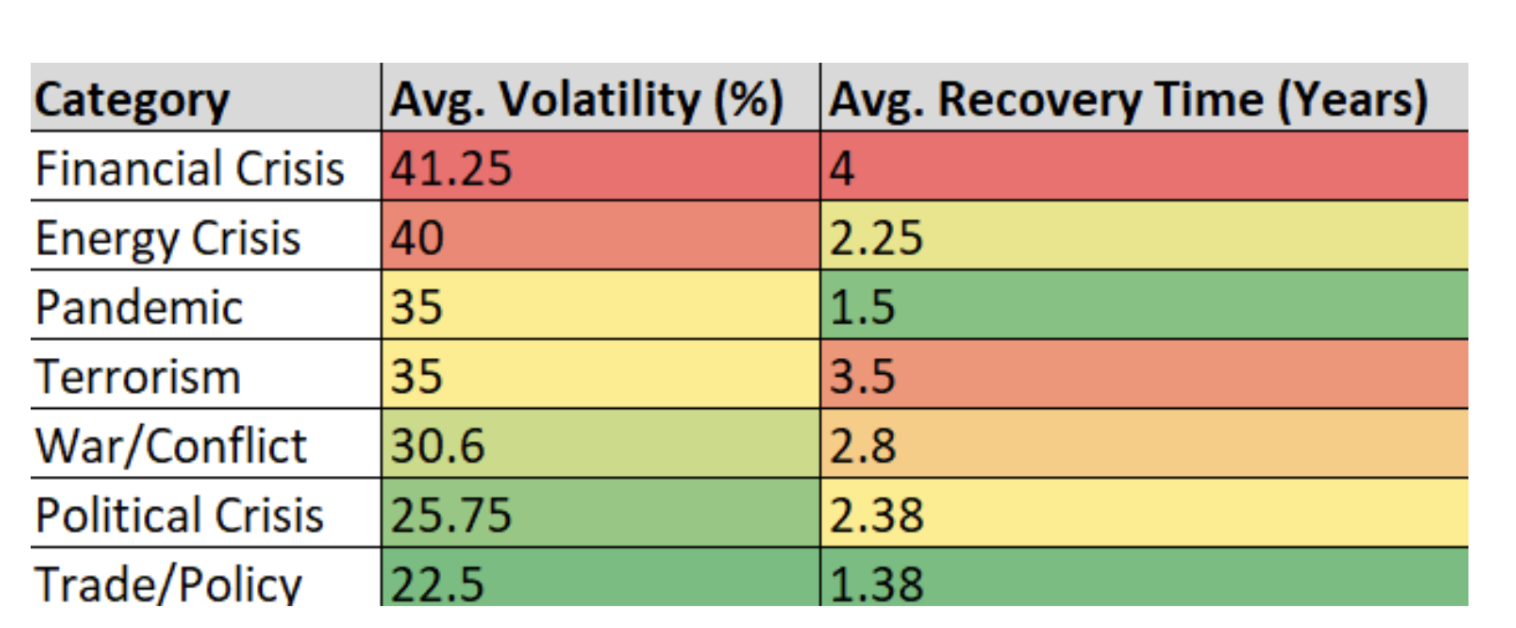
Figure 3: Volatility and recovery prediction based on historical data.
Figure 3 represents a heatmap illustrating the average volatility percentage and recovery time for geopolitical events, grouped into seven categories. This heatmap provides insights into how likely and significant the impact of future geopolitical events will be on market volatility and recovery time. Banks should develop processes to calibrate their market surveillance systems by anticipating the impact of geopolitical events based on their severity, for accurate detection and response aligned with market conditions.
Security segmentation based on geopolitical factors: The securities should be segmented based on their sectors specific impacts of geopolitical events, such as semiconductors due to export control or Energy (oil and gas) due to wars or political instability. The security segments should be assigned a risk score that can be further integrated into the calibration process. Thresholds are tailored to the characteristics of each security segment (Refer to FCA Market Watch for asset class specific calibration guidance)
Contextual Tagging: The alert data should be enriched with relevant news and event context, such as geopolitical developments or major announcements. The system should identify and attach the relevant news to the alert for contextual understanding by the investigator. This will help the investigator to quickly distinguish the unusual trading alert from rational responses to external events and potentially abusive behavior.
Peer Benchmarking: Alerts on trader behavior should be reviewed against the peer-group activity such as comparable instruments or traders with similar profiles to understand the trader’s behavior in the context of market trends. The alerts that are consistent with industry-wide reactions should be filtered out to focus attention on genuinely suspicious outliers.
Continuous review, testing and feedback loop: As market volatility changes over time due to external factors, the thresholds should be periodically reviewed and updated using MI reporting and investigator feedback to ensure ongoing effectiveness, especially as new risks emerge.
Collaboration across different departments: The risk department in financial institutions is responsible for developing market risk management models and corresponding trading policies. The trading policies guide the trader for buy-sell activities depending on the different levels of market volatility. The investigators from the compliance department should incorporate trading policies into their alert investigation procedures.
Futuristic view
As geopolitical risks become more frequent and complex, surveillance systems must evolve to effectively understand and respond to new threats. The advancement of AI, including GenAI models, has significantly disrupted the compliance domain by enhancing the efficiency and effectiveness of these systems. Emerging trends include AI-driven surveillance, the integration of alternative data sources, and the need for cross-border information sharing in a fragmented regulatory environment.
AI-powered surveillance tools are transforming market compliance by enabling real-time monitoring and adaptive alerting in volatile environments. For example, AI can analyze vast streams of trading data alongside news sentiment and geopolitical developments, flagging activities that deviate from peer or historical norms during market shocks. During periods of heightened volatility, such as sanctions or geopolitical conflicts, machine learning models can dynamically recalibrate thresholds. This reduces false positives and focuses analyst attention on genuinely suspicious behavior. This approach improves operational efficiency and ensures compliance teams are not overwhelmed by irrelevant alerts during critical events.
However, technology alone cannot replace the nuanced judgement required in complex market scenarios. Investigators must be trained to distinguish between legitimate, news-driven market responses and manipulative behaviors that exploit such events. By combining scenario-based training with ongoing geopolitical awareness, compliance professionals can make the surveillance systems both responsive and accurate, upholding market integrity even in times of uncertainty.
Conclusion
Geopolitical risks are increasingly influencing financial markets, necessitating the evolution of market surveillance systems. Traditional systems, built on static rules, struggle to adapt to sudden volatility, leading to excessive false positives and missed genuine market abuse alerts. Incorporating AI-driven surveillance, contextual tagging, and peer benchmarking can enhance the responsiveness and accuracy of these systems. However, technology alone is insufficient; investigators should be trained to differentiate between legitimate market responses and manipulative behaviors. By embedding geopolitical factors into surveillance calibration, financial institutions can better uphold market integrity amidst uncertainty.